
Insights from the 44th Annual Meeting of the ISDS – International Society for Dermatologic & Aesthetic Surgery
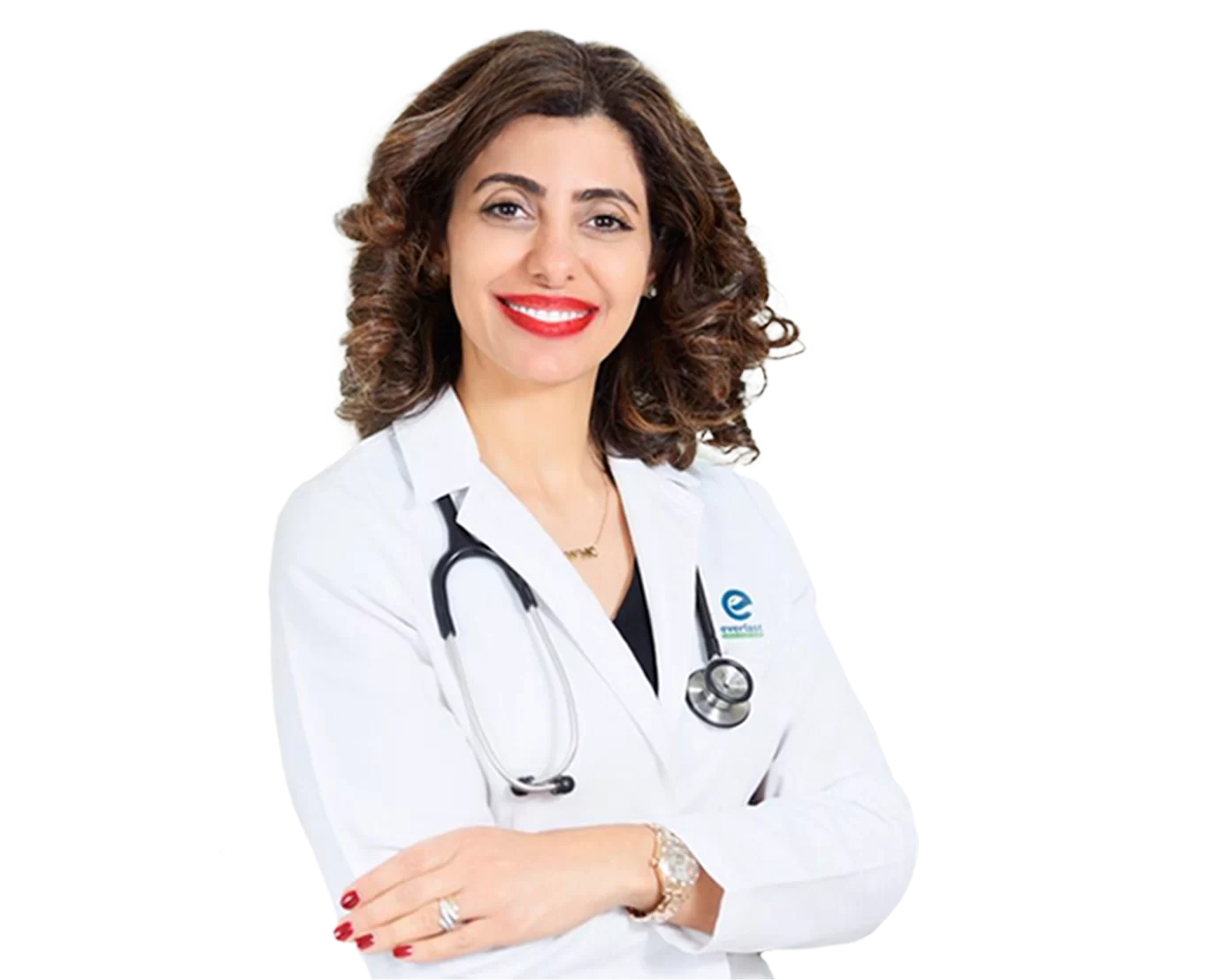
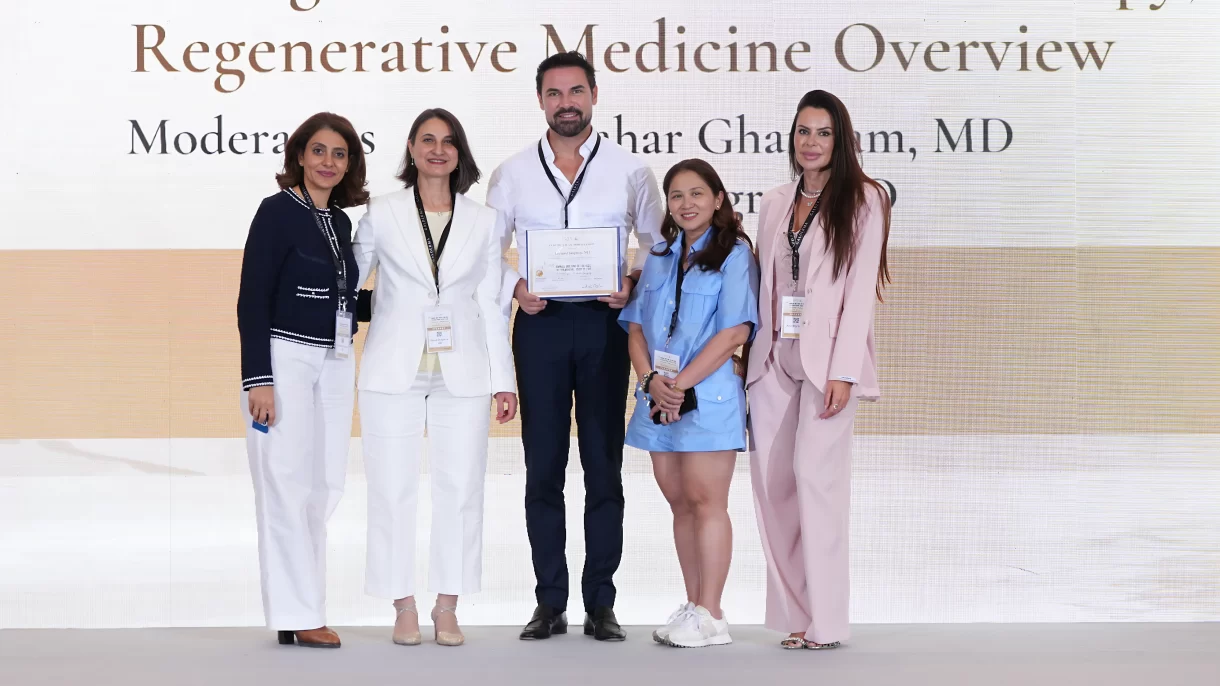
At the 44th Annual Meeting of the International Society for Dermatologic & Aesthetic Surgery (ISDS), held at the Hilton Yas Island in Abu Dhabi, Dr. Christeen Youssef, MD, delivered a groundbreaking presentation that challenges conventional wisdom about scar management.
As the Director of Everlast Clinic, a leading human subject research center in Abu Dhabi specializing in nanofat and stem cell therapies, Dr. Youssef shared compelling evidence showing how early intervention combined with regenerative medicine is transforming the treatment of scars and wound healing worldwide.
The Global Impact of Scarring
Dr. Youssef began by highlighting the enormous scale of the global scar management challenge. Each year, approximately 12 million lacerations are sutured in the United States alone, and more than 250 million surgical incisions occur globally. The financial burden is staggering—over 20 billion USD is spent annually on scar management, with 170,000 scar revision procedures performed in the U.S. every year.
Globally, more than 100 million individuals in developed countries suffer from scar-related conditions, and over 10 million people are affected by keloids, one of the most challenging types of scars to treat.

Understanding Why Scars Form
Scarring occurs as part of the body’s natural wound-healing process, which includes four main stages: hemostasis, inflammation, proliferation, and remodeling. Problems arise during the later stages, when abnormal fibroblast proliferation and excessive extracellular matrix (ECM) deposition lead to what Dr. Youssef refers to as fibro-proliferative disorders.
The key cellular players involved include fibroblasts, myofibroblasts, keratinocytes, and macrophages. Among the molecular factors, transforming growth factor-beta (TGF-β) plays a critical role and is often overexpressed in pathological scars. Understanding when to upregulate or downregulate these growth factors is essential for successful scar modulation and prevention.
The Limitations of Traditional Approaches
Despite decades of research, conventional scar treatments remain limited in effectiveness:
- Silicone gels suffer from poor patient compliance.
- Corticosteroid injections carry a high recurrence rate.
- Surgical scar revision often fails, with a risk of worsening scarring.
- Cryotherapy and radiation have significant side effects.
- Laser therapy alone provides limited benefit for deep scars.
The main shortcomings of these methods include the inability to modulate collagen remodeling, limited depth of treatment, high recurrence, and lack of personalized approaches tailored to the individual patient’s biology.
A New Paradigm: Combining Energy-Based and Regenerative Therapies
Dr. Youssef presented a pioneering approach that integrates energy-based devices—particularly fractional laser therapy—with cell-based regenerative treatments such as nanofat, stromal vascular fraction (SVF), platelet-rich plasma (PRP), and stem cell therapy.
This combination works at multiple biological levels:
- Fractional laser stimulates controlled skin remodeling and enhances collagen reorganization.
- Cell-based therapies promote regeneration, delivering growth factors and cytokines that encourage healthy tissue restoration.

- The laser can also serve as a delivery system for active materials like corticosteroids, exosomes, or PRP, amplifying therapeutic impact. When combined, these therapies have shown superior outcomes, both histologically and clinically, compared to traditional treatments.
Transformative Clinical Cases
Dr. Youssef illustrated the real-world power of this approach through several inspiring case studies:
Case 1: The Glass Accident
A young man presented with facial lacerations from a glass injury. Early intervention included removal of the initial sutures, cosmetic reclosure, SVF injection, and fractional laser therapy within two weeks. Within six months, the scars were virtually invisible.
Case 2: The Bicycle Accident
A diplomat’s wife sustained a facial injury above her lip. She was treated immediately with SVF and fractional laser, avoiding surgery entirely. The result was complete scarless healing and restored confidence.
Case 3: The Burn Patient
A ten-year-old girl suffered extensive burns affecting her chest and surrounding areas. In cultures where visible scars can have profound psychosocial consequences, early combined treatment made an extraordinary difference. With nanofat and fractional laser therapy, the patient achieved remarkable skin regeneration—restoring both her appearance and self-esteem
The Critical Message: Don’t Wait
Dr. Youssef’s most important message to clinicians was clear: early intervention is essential.
While traditional protocols advise waiting six months or more before initiating scar therapy, new evidence supports starting treatment as early as two to three weeks post-injury. Studies comparing SVF therapy to saline controls have demonstrated significantly improved healing and aesthetic outcomes when early intervention is applied—even in challenging keloid cases.
Key Takeaways
- Early intervention is critical
- Combination therapy is superior
- Conventional methods have limits
- Understanding biology matters
- Clinical evidence is growing

The Future of Scar Management
At Everlast Clinic, Dr. Youssef and her team are conducting advanced clinical studies on wound healing, diabetic ulcers, and scar management, contributing valuable evidence to the growing field of regenerative dermatology. The clinic has even received referrals from the Department of Health (DOH) in Abu Dhabi, reflecting increasing institutional recognition of these emerging therapies.
While Dr. Youssef acknowledges that we are still in the early stages of understanding and optimizing nanofat and regenerative approaches, she emphasizes the urgent need for more clinical studies, research collaborations, and scientific awareness to advance this promising field.
Conclusion
Scar therapy is entering a new era. With the integration of cell-based regenerative medicine, smart nanomaterials, and advanced laser technologies, physicians can now achieve outcomes once thought impossible—even in severe cases like keloids and burns.
Dr. Christeen Youssef’s pioneering work in Abu Dhabi represents the forefront of this transformation, uniting science, technology, and compassion to redefine what healing can look like.
“Early intervention changes everything,” Dr. Youssef emphasizes. “We are not just treating scars — we are restoring confidence, beauty, and quality of life.”